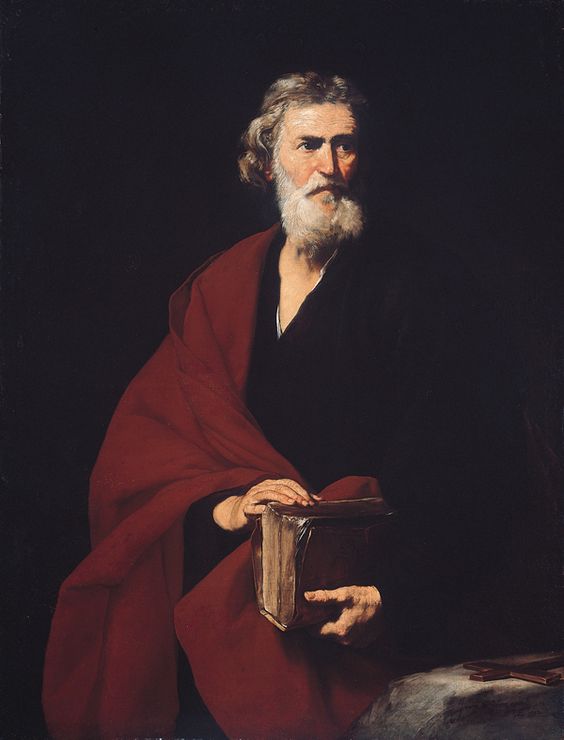
| Saint Matthew the Evangelist | |
|---|---|
 |
|
| Birth | 1st century AD. Capernaum, Israel |
| Feast Day | |
| Patron | Tax Collectors, Accountants, Bankers, Bookkeepers, Financial Officers |
From tax collector to Apostle and Evangelist: this is the arc of Saint Matthew's life. He was called Levi, which means “God's gift”. He was a contemporary of Our Lord Jesus. The Church celebrates him on September 21. Saint Matthew is the patron of bankers, accountants, and bill collectors.
Personal Life
,p>Lake Tiberias sparkled and, as usual, Matthew was there, sitting at the custom desk at Capernaum, to collect the taxes that the Jews had to pay to the Romans. He was a publican, despised by the people because he was considered in league with the oppressors. Probably, Matthew had become accustomed to it, but that day he heard a different voice. A man told him, “Follow me,” and Matthew got up and followed the man ever after. That man was Jesus, and Matthew’s life was no longer as before.Levi organized a great banquet for Jesus, who went with his disciples, stirring up the scorn of scribes and Pharisees because there were in attendance publicans and sinners. Jesus’ answer greatly touched Matthew. “They that are well have no need of a physician, but they that are sick,” said the Nazarene, adding, “For I came not to call the just, but sinners.” Matthew, who was a sinner, left everything and followed Jesus, becoming one of the Twelve. He is also named a few times in the Acts of the Apostles. The proclamation of Christ would be his mission.
He is the author of the Holy Gospel according to St. Matthew, which was almost certainly written not in Greek but Aramaic. The Gospel of Matthew is written with an audience of Christians of Jewish origin in mind: the text emphasizes that Jesus is the Messiah who fulfills the promises of the Old Testament.
According to some sources, he would die of natural causes. Other traditions, considered untrustworthy, have it that his earthly life ended in Ethiopia. His relics are located in the crypt of the Cathedral of Salerno, where his feast day is marked with a solemn procession. [1]
Miracles and Testimonies
- Protection from Fire - The king's successor, Hirtacus, ordered that Matthew be burned to death. However, when the apostle was placed upon the pyre, the fire did not harm him, but instead turned on the idolaters.
- Resurrection of the Princess - According to tradition, when local magicians failed to revive the king's daughter, St. Matthew commanded her to arise in the name of Jesus Christ, restoring her to life and health.
Devotion
In the description of the four beings of the Apocalypse (eagle, ox, lion, man) Saint Matthew is associated with that of man.
His figure is dear to iconography. Particularly known is the “Calling of St. Matthew” painted by Caravaggio between 1599 and 1600, kept in the Church of St. Louis of the French in Rome. An evocative painting in which light plays a fundamental role, a symbol of grace, which does not come from the window but from Jesus. A scene that draws the viewer into the dramatic action: Jesus’ finger points to Matthew, who in turn indicates himself, to ask for confirmation of the call. The story of St. Matthew and the painting of Caravaggio marked the life of Pope Francis, who told of it in his interview with Fr. Antonio Spadaro, SJ, in La Civiltà Cattolica in 2013, in which, in relation to the figure of St. Matthew, the Holy Father defines himself as “a sinner to whom the Lord turned his eyes.” [1]
Legacy
Matthew was a “publican”, namely, a tax collector on behalf of the Roman Empire, and for this reason was considered a public sinner. But Jesus calls Matthew to follow him and to become his disciple. Matthew accepts, and invites Jesus along with the disciples to have dinner at his house. Thus an argument arises between the Pharisees and the disciples of Jesus over the fact that the latter sit at the table with tax collectors and sinners. “You cannot go to these people’s homes!”, they said. Jesus does not stay away from them, but instead goes to their houses and sits beside them; this means that they too can become his disciples. It is likewise true that being Christian does not render us flawless. Like Matthew the tax collector, each of us trusts in the grace of the Lord regardless of our sins. We are all sinners, we have all sinned. By calling Matthew, Jesus shows sinners that he does not look at their past, at their social status, at external conventions, but rather, he opens a new future to them. I once heard a beautiful saying: “There is no saint without a past nor a sinner without a future”. This is what Jesus does. There is no saint without a past nor a sinner without a future. It is enough to respond to the call with a humble and sincere heart. The Church is not a community of perfect people, but of disciples on a journey, who follow the Lord because they know they are sinners and in need of his pardon. [2]