Saints (81)
Saint Gabriel the Archangel
Saint Gabriel the Archangel
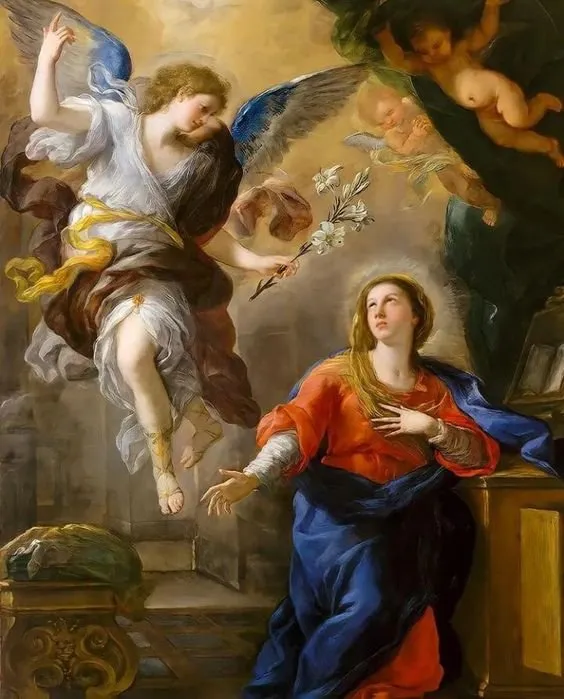
Archangel Gabriel “is the one who brings the good news, the one who brought the news to Mary, Zachariah and Joseph”, Pope Francis explained. He is therefore the messenger of the “good news of salvation”. He too is “with us and helps us along our journey”, especially when, as often happens, “with so much bad news or news with no substance, we forget the good news, the one of the Gospel”. It is “Gabriel himself who reminds us of this”, he added.
History
The New Testament mentions Archa…
Saint George
Saint George (280-303)
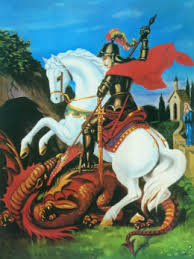
Few saints can boast a cult as widespread and popular as that of St George, knight and martyr of Christ, who lived between the third and fourth centuries. He is patron of many churches, as well as many countries and regions of the world. Both East and West keep his feast on April 23.
Personal Life
George, whose name in Greek means “farmer,” was born to a Christian family in Cappadocia around the year 280. After moving to Palestine, he joined the army of Diocletian. When the emperor…
Saint Giles
Saint Giles (650-720)
Saint Giles (c. 650–710) was a 7th-century Greek hermit and Benedictine abbot, renowned for his holiness and his life of solitude in southern France. He is celebrated as one of the 14 Holy Helpers, a group of saints invoked for protection against disease and misfortune, and is the patron saint of beggars, the disabled, and nursing mothers.
Personal Life
Historical information about the life of Saint Giles is rather scarce. According to some sources, he was born in Athens at the begi…

Saint Gregory Nazianzus
Saint Gregory Nazianzus (329-390)
Saint Gregory of Nazianzus (c. 329–390 AD), also known as St. Gregory the Theologian, was a 4th-century Archbishop of Constantinople, Church Father, and orator. He is renowned for defending the Trinity against Arianism and for his refined rhetorical style, which infused classical Greek philosophy into early Christian theology.
Personal Life
Gregory was born into a noble family in about 330 A.D. and his mother consecrated him to God at birth. After his education at home, he attended t…
Saint Gregory the Great
Pope Gregory I (540-604)
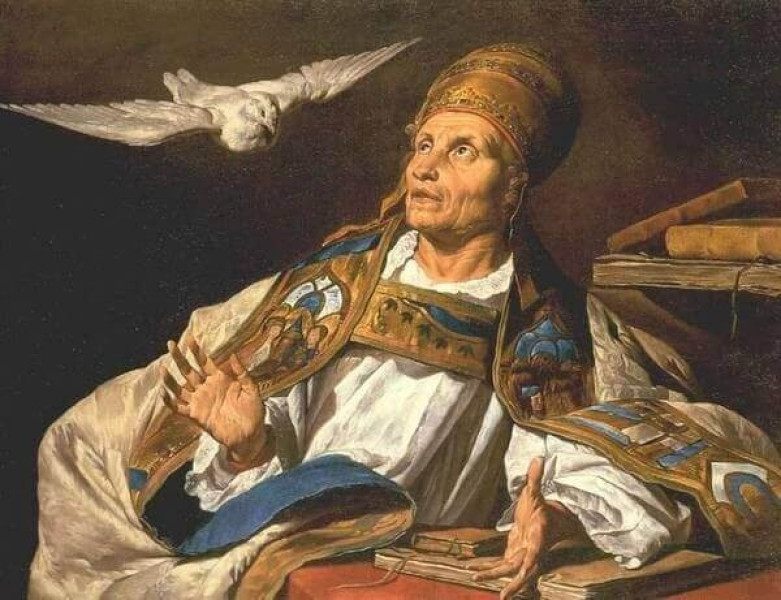
Gregory left his office as prefect of Rome to become a monk, only to be elected Pope in the midst of famine and plague. This Pope, who was declared a saint and “the Great” by popular acclaim, is one of the four great Latin doctors of the Church. His feast day is September 3.
Personal Life
Gregory was born around 540 A.D. into worldly prestige – his family belonged to the Roman nobility and his father was prefect, or mayor, of the city. He was also heir to a Christianity profoundly …
Saint Isaiah
Saint Isaiah (8th century BC - 7th century BC)
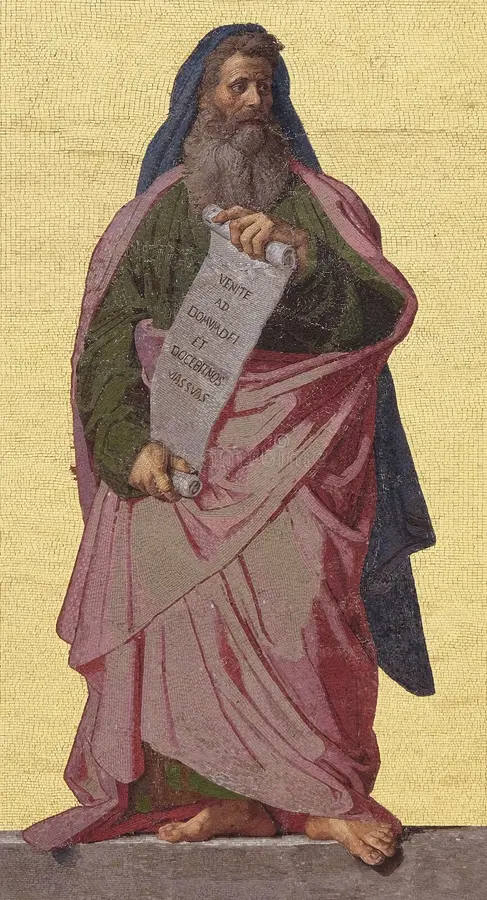
St. Isaiah was a major 8th-century B.C. Hebrew prophet in Jerusalem whose writings form the Book of Isaiah, focusing on God's holiness and messianic prophecies. He advised kings regarding Assyrian threats, urging trust in God over political alliances. Known for predicting the Messiah's birth and suffering, he is celebrated in Christianity as an "Old Testament evangelist," honored on May 9th.
Personal Life
The earliest recorded event in his life is his call to prophecy as now found in…
Saint Isidore of Seville
Saint Isidore of Seville (6th century - 7th century)
Saint Isidore of Seville was a highly influential scholar, bishop, and Doctor of the Church. Widely celebrated as the "Schoolmaster of the Middle Ages," he is best remembered for his monumental encyclopedia, the Etymologiae, which aimed to preserve the accumulated knowledge of the ancient world during a turbulent era.
Personal Life
Saint Isidore is the last of the Latin Fathers of the Church and is credited with having guided the society of the Iberian Peninsula, a centre of culture …

Saint James the Great
Saint James the Great (1st century AD)
St. James the Greater was one of the Twelve Apostles of Jesus, often recognized as part of his inner circle, alongside his brother John and Peter. A Galilean fisherman, he witnessed major events like the Transfiguration and was the first apostle to be martyred, beheaded in 44 AD by King Herod Agrippa I.
Personal Life
The name "James" is the translation of Iakobos, the Graecised form of the name of the famous Patriarch, Jacob. The Apostle of this name was the brother of John and in th…
Saint James the Less
Saint James the Less (1st century AD)
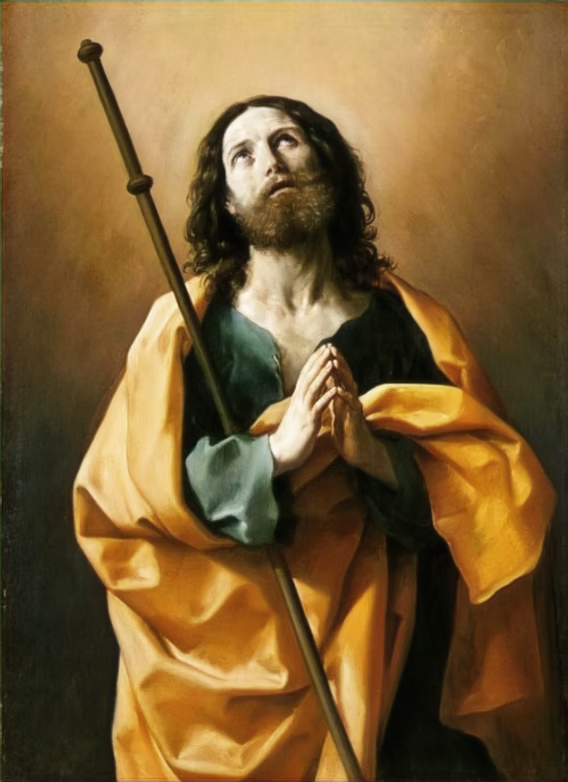
Saint James the Less, also known as the son of Alphaeus, was one of the Twelve Apostles chosen by Jesus and is traditionally identified as the first Bishop of Jerusalem. He played a pivotal role in the early Church by presiding over the Council of Jerusalem, where he helped bridge the gap between Jewish traditions and the emerging Christian faith. He is also credited as the author of the Epistle of James, which famously emphasizes that "faith without works is dead," leaving a legacy of practica…
Saint Jeremiah
Saint Jeremiah (7th century BC - 6th century BC)
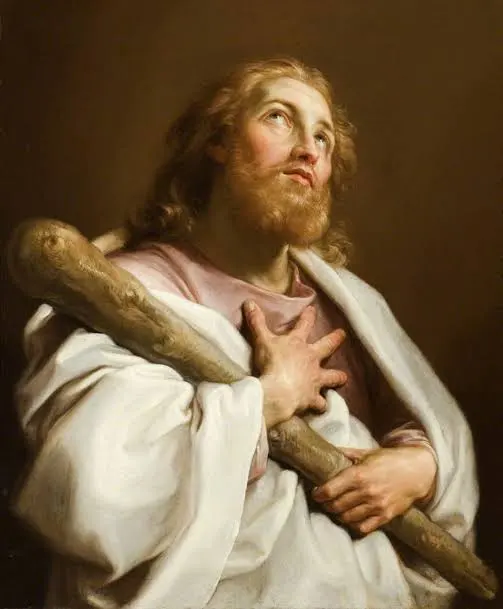
Saint Jeremiah was a major 7th-6th century BC Old Testament prophet known as the "weeping prophet". As a priest from Anathoth, he was called by God to warn Judah of destruction by Babylon due to idolatry. He witnessed the fall of Jerusalem, authored the Book of Jeremiah and Lamentations, and is honored as a saint for his steadfast faith and suffering.
Personal Life
Jeremiah was born and grew up in the village of Anathoth, a few miles northeast of Jerusalem, in a priestly family. In h…
Saint Joachim
Saint Joachim (1st century BC)
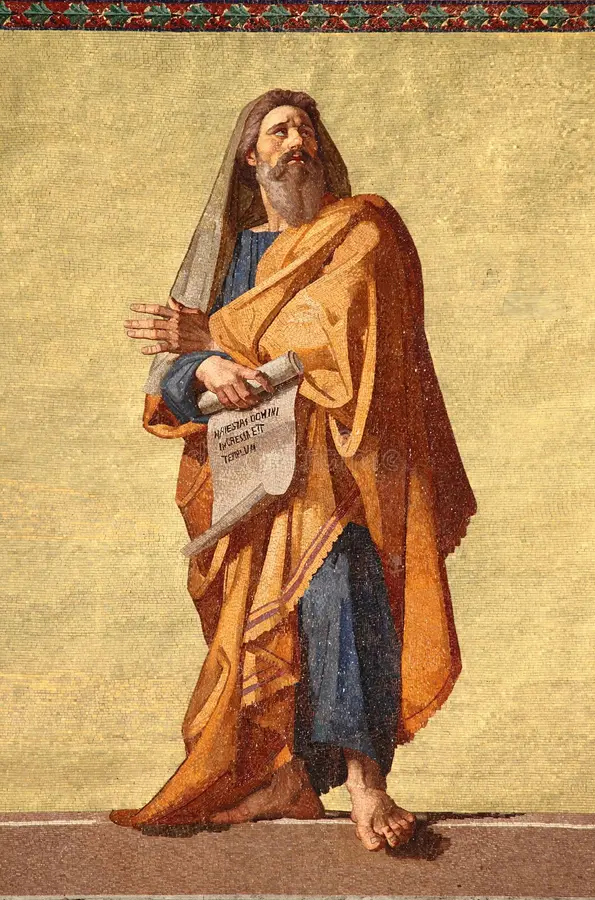
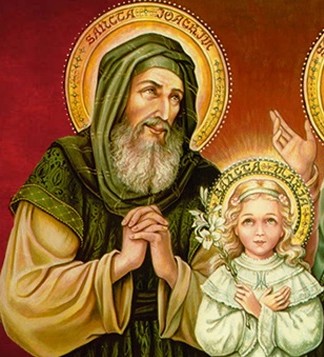
St. Joachim was, according to Christian tradition, the husband of Saint Anne and the father of the Virgin Mary, making him the grandfather of Jesus Christ. He was a wealthy and devout man from Nazareth who, despite facing societal disgrace for being childless, was blessed in his old age with the birth of Mary. His feast day is July 26, shared with St. Anne.
Personal Life
Saints Joachim (sometimes spelled "Joaquin," pronounced "wal-keem") and Anne, are the parents of the Virgin Mary.…
Saint Joan of Arc
Saint Joan of Arc (1412-1431)
St. Joan of Arc was a French peasant girl who, claiming divine guidance, led the French army to a pivotal victory at Orléans during the Hundred Years' War. She was later captured, tried for heresy, and burned at the stake by the English, but was canonized as a saint in 1920.
Personal Life
Joan was born at Domremy, a little village on the border between France and Lorraine. Her parents were well-off peasants, known to all as good Christians. From them she received a sound religious up…
